
Let me be clear about something before we get into this: I didn’t want to write this article.
I genuinely didn’t. Because writing this means admitting that the relationship I’ve had with my Pixel — going all the way back to the very first one — might be on the rocks. And nobody wants to be that person. The one who stayed too long. The one who kept making excuses. The one whose friends kept saying “bro, just get the iPhone” while you smiled and said “nah, I’m good” like you were defending someone’s honor.
I’ve been defending Google’s honor for years. And lately? Google hasn’t been holding up their end of the deal.
We Used to Have Something Special
There was a time when the Pixel camera was the camera. Full stop. No asterisk. No “well, it depends on the lighting.” If you wanted the best photo taken by a smartphone, you pulled out a Pixel. That was the thing. That was our thing.
The Pixel 6 was the last time Google really swung for the fences on camera hardware — upgrading to a bigger, higher-resolution 50MP primary sensor that actually made you feel the difference. And for a minute, it felt like Google was ready to go toe-to-toe with everybody.
But then… they kind of just stopped.
Since the Pixel 6, the hardware story has been mostly incremental. Modest upgrades here. A new telephoto there. Meanwhile Samsung, Apple, and players you might not have even been watching have been quietly closing the gap — and in some cases, lapping us on video. Apple didn’t just close the gap on video quality. They lapped the field so long ago that everyone else is racing for second place, and Google is somewhere in that pack pretending they’re not.
And Google’s answer to the video problem? Video Boost. Which sounds cool until you find out it requires you to upload your footage to the cloud to process it. Your video. To the cloud. For enhancement. On a phone that costs nearly a thousand dollars. That’s like buying a sports car and having to take it to the dealership when you want to drive it fast.
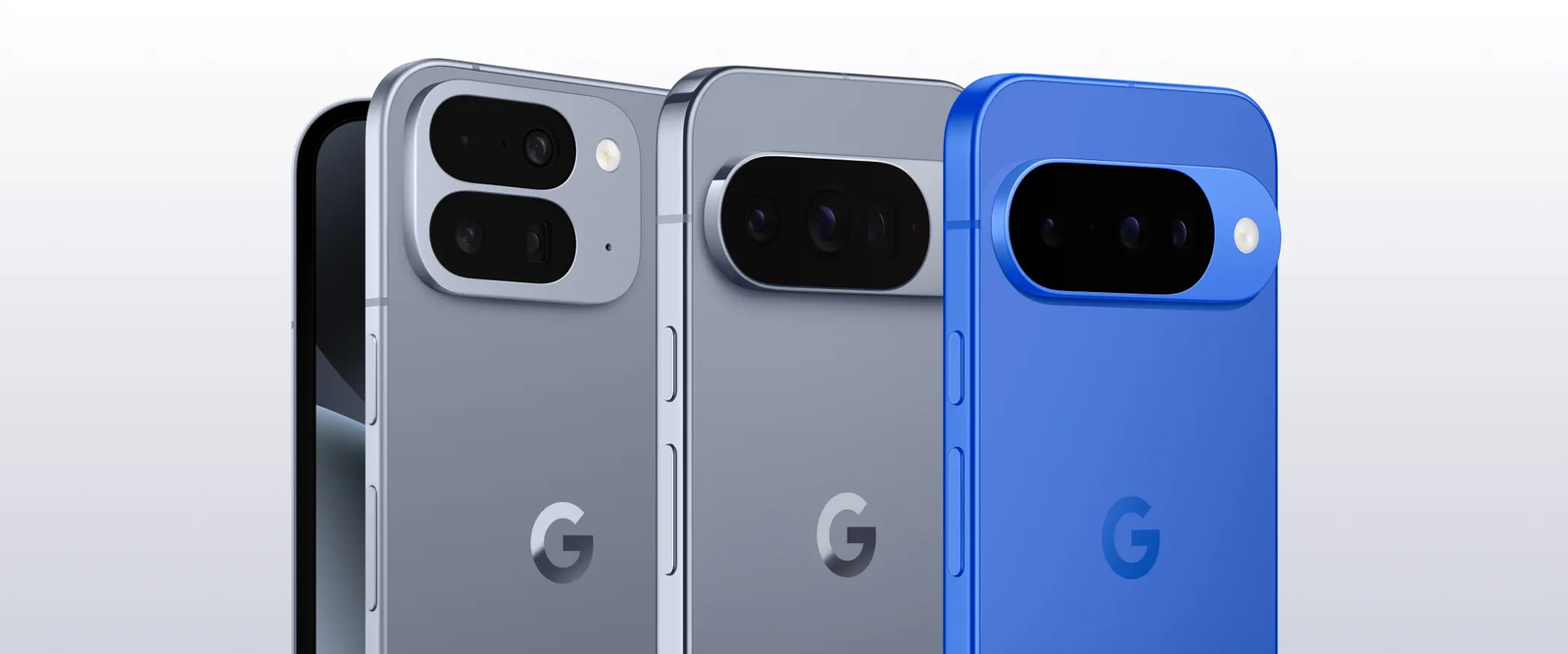
I’m on the 9 Pro XL. And I Skipped the 10.
I want y’all to understand the weight of that sentence FULLY.
I’m not a casual user who picked up a Pixel because it was on sale. I’m not someone who stumbled into the ecosystem. I have been with Google since the very first Pixel. I’ve upgraded through generations the way some people follow a sports team — not because every season is great, but because you’re invested. You’re a fan. You believe in the rebuild.
I bought the 9 Pro XL. The flagship. Top of the line. And when the Pixel 10 dropped, I looked at it — really looked at it — and felt nothing. No pull. No “okay, this is the one.” The Pro and Pro XL reportedly carried over the exact same camera hardware as the 9 Pro. Same sensors. Same setup. Just a new chip and a refreshed feature list I wasn’t particularly excited about.
So I stayed put.
That’s not me being cheap. That’s not me being lazy. That’s a decade-long loyalist, already sitting at the top of the Pixel lineup, looking at the next generation and deciding it wasn’t worth the trouble. That should alarm somebody at Google. That should alarm a lot of people at Google.
AI Is Not a Personality
Look — I’m a tech dude. I’m not anti-AI. I think there’s real utility in a lot of what Google is doing with Gemini integration and on-device processing.
But there’s a difference between AI enhancing a great phone and AI replacing the parts of the phone that used to be great.
The Pixel used to win on pure photography fundamentals — sensor quality, color science, night performance. The kind of stuff that doesn’t need a disclaimer. Now the pitch is increasingly “our software will fix it in post.” That’s Google basically saying cut us some slack, we tried.
Every generation, the AI feature list gets longer. Every generation, I keep waiting for the hardware to match the ambition. It hasn’t. And I’m getting tired of being wowed by software tricks on hardware that’s been coasting since the Obama administration.
The Design Has Been the Same for Two and a Half Phones
I want to be fair here. The Pixel design isn’t bad. The camera bar is distinctive. I respect the commitment to the aesthetic.
But there’s a difference between a signature look and “we honestly like it like this.” Apple gets away with incremental design updates every cycle because the iPhone is a cultural object. People line up for those things like a new pair of retro Jordans. Google doesn’t have that kind of cultural grip — which means every new Pixel needs to at least feel like a reason to care.
Right now it mostly just feels like last year’s phone with a new chip and a longer list of features I didn’t ask for.
I Know the Grass Isn’t Always Greener
Here’s where I have to be honest with myself: I know iPhone users who are just as frustrated with their iPhones as I am with my Pixel. The ecosystem lock-in. The charging. The way Apple hands you a “new feature” that Android had four years ago and acts like they invented gravity.
I don’t want to be an iPhone person. I love Android. I love the Google ecosystem. I love the customization, the integration, the way everything just talks to each other. Switching to iPhone wouldn’t feel like an upgrade — it would feel like defeat. Like reluctantly joining a crowd I spent years happily opting out of. And honestly? I can’t afford some of the higher-end alternatives that might scratch that itch. So it’s not like I’ve got a long list of exciting options here.
But here’s what Apple does give you: consistency. Quality you can count on. And when you’re a content creator trying to capture moments that matter — on video especially — “reliable” starts sounding really attractive, even if you hate everything surrounding it.
Google, I’m Not Gone. But I’m Not Okay Either.
I’ve been with you since day one. I bought into the vision when nobody else was paying attention. I’ve defended you at family dinners, talked people off the iPhone ledge, and worn the “I’m a Pixel person” identity like a badge.
But I skipped a generation. And I didn’t even feel bad about it.
That’s new. That’s never happened before. And it scared me a little — not because I’m leaving, but because I realized I’m not as locked in as I thought I was. The attachment is loosening. Not from anger. Not from some dramatic falling out. Just from the slow, quiet accumulation of meh.
The Pixel can still be what it was. The software intelligence is real. The ecosystem is strong. The vision — when Google actually commits to it — is compelling. But Google needs to stop treating camera hardware like a solved problem. They need to stop hiding behind AI feature announcements when the foundation underneath hasn’t moved. And they need to understand that loyalty, real loyalty, has to be earned in every generation — not borrowed from the last one.
Because right now, I’m sitting here with my 9 Pro XL, watching the 10 come and go, and wondering for the first time in a long time whether the next phone I buy is going to have a Google logo on the back.
I hope it does.
I’m just not sure anymore.


